

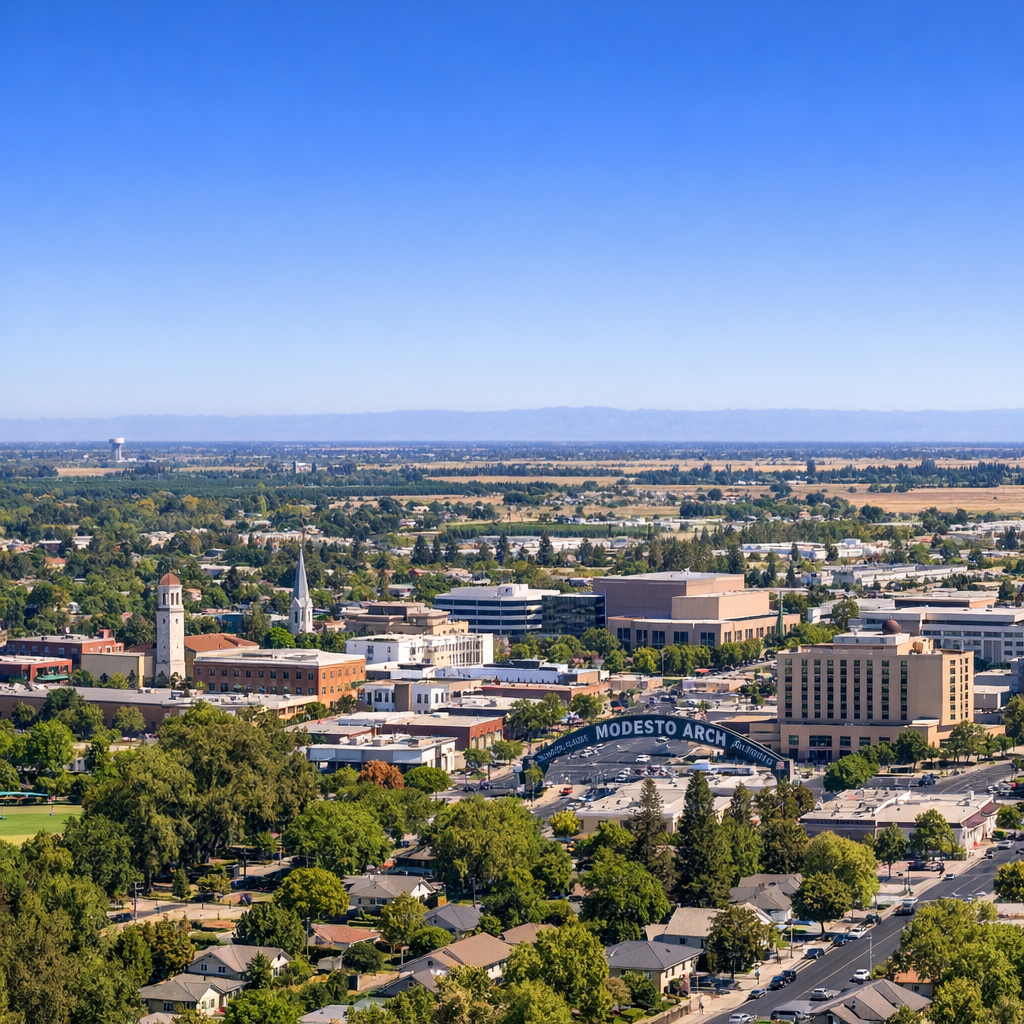
Modesto, located in California’s Central Valley, experiences a hot-summer Mediterranean climate characterized by distinct seasonal variations. Understanding these patterns is essential for residents and visitors alike.
Summer: Hot and Dry
Summers in Modesto are notably hot and arid. From June through September, daytime temperatures frequently soar above 90°F, with July often being the hottest month, averaging highs around 95°F. Heatwaves pushing temperatures above 105°F are not uncommon during this period. Rainfall is scarce, contributing to dry conditions that can elevate fire risks. Residents should prioritize hydration and limit outdoor activities during peak heat hours.
Winter: Mild and Wet
Winters are mild, with average high temperatures in December around 56°F and lows near 40°F. This season brings the majority of Modesto’s annual rainfall, averaging about 13 inches, primarily between November and March. The city occasionally experiences dense ground fog, known as Tule fog, which can significantly reduce visibility and make driving hazardous. It’s advisable to exercise caution during these foggy periods.
Spring and Fall: Transitional Periods
Spring and fall serve as transitional seasons. Spring sees gradually warming temperatures and decreasing rainfall, while fall features cooling temperatures and the onset of the rainy season. These periods offer comfortable weather, making them ideal for outdoor activities.
Environmental Considerations
Modesto’s climate influences various environmental factors. The dry summers can lead to drought conditions, affecting water availability and agricultural productivity. Conversely, winter rains, while beneficial, can cause localized flooding due to the city’s limited storm sewer infrastructure. Additionally, the region’s air quality can be impacted by both natural and human-made factors, including agricultural activities and vehicular emissions.
Understanding Modesto’s climate patterns is crucial for planning daily activities, agricultural operations, and environmental management. Staying informed and prepared can help mitigate the challenges posed by these seasonal variations.